


Hope on the Horizon: How rTMS May Support the Brain in Alzheimer’s Disease
Alzheimer’s disease is a progressive neurological condition that gradually erodes the brain’s ability to function. One of the earliest and most noticeable signs is difficulty forming new memories and learning new information. Over time, the disease advances, eventually affecting nearly every aspect of a person’s cognitive and daily functioning.
A central feature of Alzheimer’s is the loss of synaptic connections between neurons, followed by cell death. In the mid-to-late stages, this atrophy becomes visible on brain imaging. Current treatment options remain woefully limited. While there are several medications available that increase the availability of certain neurotransmitters in the brain, they are effective for only about 30% of people, and their benefits generally are restricted to the earlier stages of the disease.
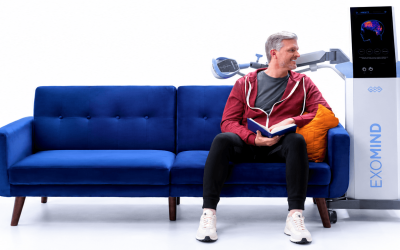
This raises an important question: Could repetitive transcranial magnetic stimulation (rTMS) help strengthen or restore neural connections in people living with Alzheimer’s disease?
Emerging research suggests the answer may be yes. A 2022 study by Qin and colleagues found positive neuronal changes in individuals with mild to moderate Alzheimer’s disease who received a combination of rTMS and cognitive training. The group in their study that received cognitive training only did not show the same positive effects. In the same year, Chen and colleagues reported improved connectivity in the hippocampal region, an area of the brain that is critical for memory, along with measurable gains in memory performance.
While more research is still needed, these early findings are encouraging. They point toward the possibility of non-invasive approaches that may support brain function and offer meaningful hope where treatment options have long been limited.
At Victoria Memory Clinic, we specialize exclusively in Exomind rTMS treatment in Victoria, BC. Led by Dr. Ingrid Friesen, our clinical team works with this technology daily, providing focused expertise and individualized attention at every step from consultation through treatment planning.
If you or someone you care about is exploring options for memory concerns or mild cognitive changes, we invite you to start with a free consultation. We’ll take the time to understand your goals and symptoms, answer your questions, and discuss whether Exomind rTMS could be an appropriate next step for you
Ready to explore Exomind rTMS?
Victoria Memory Clinic focuses exclusively on Exomind rTMS treatment in Victoria, BC. Led by Dr. Ingrid Friesen, our clinical team works with this technology every day, bringing focused experience and individual attention to every consultation and treatment plan.
If you’re curious about whether Exomind may be appropriate for what you’re experiencing, start with a free consultation. We’ll answer your questions, talk through your goals and symptoms, and explain what treatment could look like for you.