


The Next Chapter in Psychiatric Care
Mental health care has changed profoundly over the past 150 years.
Each era has helped us understand suffering, healing, and the brain in a deeper way. First, care focused on the unconscious mind: the stories, memories, fears, and patterns beneath our symptoms. Then, psychiatry moved toward brain chemistry, using medication to support mood, anxiety, sleep, focus, and daily function.
Today, another chapter is taking shape.
Neuromodulation works with the brain’s electrical circuits and patterns of connectivity. It reflects a growing understanding that mental health is shaped by story, chemistry, and the way different areas of the brain communicate with each other.
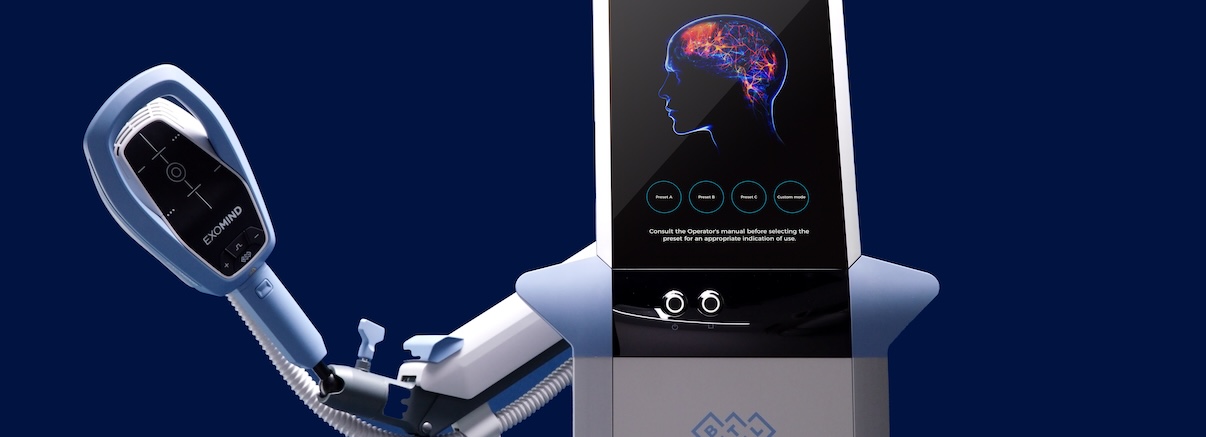
This is where treatments such as repetitive transcranial magnetic stimulation, also known as rTMS, and advanced technologies like Exomind enter the conversation.
For people who have tried therapy, medication, lifestyle changes, and other supports while still feeling stuck, this evolution matters. It offers another way to support the brain’s ability to regulate, restore, and move forward.
Psychiatry 1.0: Understanding the Psyche
The first major era of modern psychiatry was shaped by psychoanalysis.
Led by Sigmund Freud, psychoanalysis focused on the unconscious mind. The belief was that many symptoms were connected to unresolved inner conflicts, often rooted in early life experience.
Treatment involved long-term talk therapy. Patients explored dreams, memories, emotional patterns, and the relationship between past experience and present suffering.
One of Freud’s most famous cases was Sergei Pankejeff, known as the “Wolf Man.” As a young child, he experienced a vivid dream of white wolves that became central to his treatment and later to the history of psychoanalytic thought. Freud used the case to explore how fear, memory, symbolism, and early experience could shape symptoms.
This era gave psychiatry something lasting: the understanding that symptoms have meaning. A person’s inner world matters. Their memories, relationships, fears, grief, and emotional patterns all shape the way distress is experienced.
Modern talk therapies have carried that understanding forward. Cognitive Behavioural Therapy, for example, helps people identify patterns in thought, emotion, and behaviour. Other therapeutic approaches help people process trauma, build coping skills, strengthen relationships, and make sense of what they are carrying.
Talk therapy remains a meaningful part of care because the human story still matters.
Psychiatry 2.0: Supporting Brain Chemistry
By the mid-20th century, psychiatry entered a second major era.
As neuroscience advanced, researchers began focusing on neurotransmitters, the chemical messengers involved in mood, motivation, sleep, appetite, focus, anxiety, and emotional regulation.
This helped shape the development of psychiatric medications, including antidepressants, SSRIs, SNRIs, mood stabilizers, and anti-anxiety medications.
Medication can provide meaningful support for many patients, helping reduce symptoms, stabilize mood, improve sleep, and create greater capacity for daily life. It can create enough steadiness for therapy, routine, connection, and healing to take hold.
Many patients, however, experience side effects. Some feel only partial improvement. Some try several medications and require additional medications to address the side effects of the initial medication. I call this chasing the symptoms. Some continue to feel foggy, flat, anxious, depressed, or disconnected even while following a treatment plan.
That experience opened the door to a deeper question: what if some symptoms are also connected to the way brain regions communicate with each other?
Psychiatry 3.0: Working With Brain Circuits
The brain is chemical. It is also electrical.
Different regions of the brain communicate through networks that influence how we think, feel, focus, respond to stress, regulate emotion, and recover from distress.
When these networks are functioning well, the brain has more capacity to respond, adapt, settle, and shift. When certain circuits are underactive, overactive, or poorly connected, symptoms can become persistent. A person may feel caught in depression, anxiety, intrusive thoughts, mental fog, emotional reactivity, or low motivation.
Neuromodulation works at this circuit level.
Repetitive transcranial magnetic stimulation, or rTMS, uses magnetic pulses to stimulate targeted areas of the brain involved in mood, clarity, and emotional regulation.
The treatment is non-invasive. Patients remain awake. There is no anesthesia and no recovery period. Sessions are delivered in a clinical setting, and patients can return to their day afterward.
One key area often involved in depression treatment is the dorsolateral prefrontal cortex, a region connected to executive function, planning, emotional regulation, and cognitive control. Neuromodulation aims to support healthier activity in these networks.
Where Exomind Fits
Exomind belongs to this newer chapter of psychiatric care.
It uses advanced rTMS technology to stimulate targeted areas of the brain involved in mood, clarity, focus, and emotional regulation. For patients who have tried other forms of care and continue to feel stuck, Exomind offers another pathway.
That matters because feeling stuck is real. A person may have done the work. They may have gone to therapy, taken medication, adjusted their sleep, improved their routine, moved their body, reduced stress, and built support around them. They may still feel that something deeper in the system has yet to shift.
Neuromodulation gives clinicians another way to work with the brain directly. For some people, that may mean improved mood. For others, it may mean clearer thinking, better sleep, reduced mental noise, steadier emotional response, or a greater sense of resilience.
Exomind expands the care conversation. It gives patients and clinicians another tool, especially when traditional approaches have brought partial relief and the person is ready to explore what else may be possible.
A More Complete Future for Mental Health Care
The evolution of psychiatry is a story of expansion.
Psychoanalysis helped the field understand the role of story, memory, emotion, and meaning. Medication brought a deeper understanding of brain chemistry and gave some people meaningful relief from symptoms that were affecting their daily lives. Neuromodulation is now adding another layer by focusing on brain circuits, connectivity, and targeted stimulation.
Together, these chapters point toward a more complete model of care. One that respects the person’s history, biology, symptoms, goals, and lived experience.
That is where Exomind fits.
It represents a newer path in psychiatric care: precise, non-invasive, and grounded in the brain’s ability to change. For people who have felt stuck, it offers a way to explore what may still be possible with clarity, dignity, and hope.
Mental health care has evolved, and that evolution continues to open new doors for healing.
Ready to explore Exomind rTMS?
Victoria Memory Clinic focuses exclusively on Exomind rTMS treatment in Victoria, BC. Led by Dr. Ingrid Friesen, our clinical team works with this technology every day, bringing focused experience and individual attention to every consultation and treatment plan.
If you’re curious about whether Exomind may be appropriate for what you’re experiencing, start with a free consultation. We’ll answer your questions, talk through your goals and symptoms, and explain what treatment could look like for you.